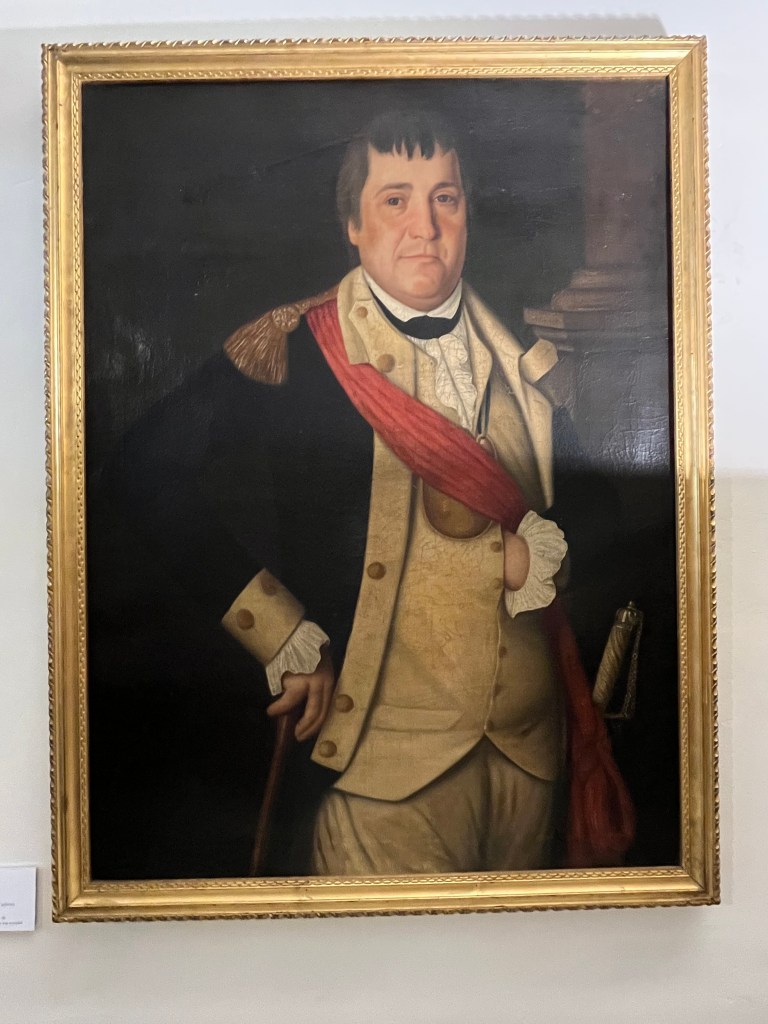
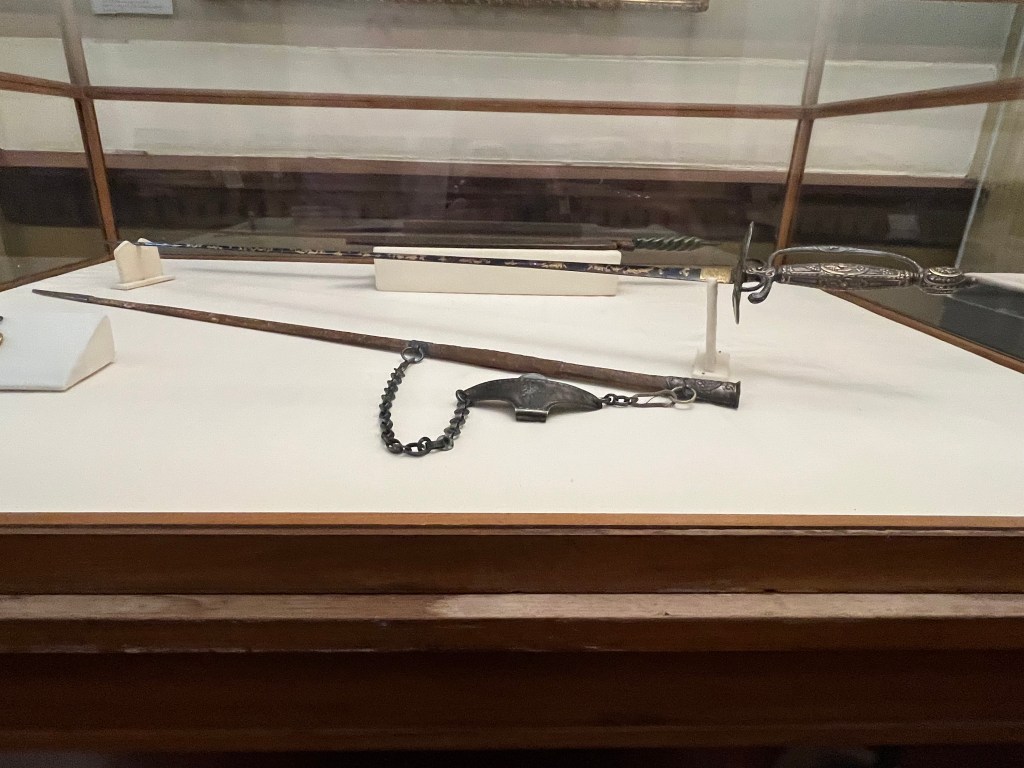
William Barton (1748-1831) was the second child of Benjamin and Lydia Barton of Warren. He married Rhoda Carver in Providence in 1771. William and Rhoda had nine children: William, Benjamin, George Washington, Daniel, Henry, Robert, John, Anna, and Sarah. William worked as a hatter. In 1775, he became adjutant of William Richmond’s Regiment, and later that year was promoted to command the Colonel’s Company. In 1776, he held the position of brigade-major. Later that year, William was major of Archibald Crary’s Regiment. In 1777, he was a lieutenant colonel, and led a nighttime raid to Aquidneck Island to capture General Richard Prescott, commander of the British garrison. For this success, he was presented with a sword by Congress.
During the 1778 Warren/Bristol Raid, William was sent to command by General Sullivan. He was wounded multiple times and never fully recovered. In 1779, he returned to command a corps of light infantry. In 1788, William was adjutant general of the Rhode Island Militia. As of the 1790 United States Census, there was one enslaved person living in the Barton household. William was a Federalist delegate from Providence to the Constitutional Convention in South Kingstown in 1790. Early in the Convention, he said “We have met on a very interesting Piece of Business, as much so as any ever within these Walls.” William argued for restricting the slave trade. After Nathan Miller made a Biblical argument against any restriction, William responded “The New Testament directs that we do to all as we would have them do to us. Will the Gentleman [Miller] be willing that his tender Grand Children should be taken and carried away as he sees Africans?” William was opposed to adjourning the Convention without ratifying the Constitution for fear of how Congress would react. In 1791, he was appointed by George Washington to be an inspector of Rhode Island’s ports. William was inspector general of the militia in 1793, and commander of the Providence County Brigade in 1795. He was the major general in command of Rhode Island’s militia from 1802 to 1808. The Town of Barton, Vermont was named for him, and founded on land he was granted for his service. Due to complications with the ownership of this land, William spent 14 years in debtors prison in Vermont. He was eventually released in 1825 due to the intercession of the Marquis de La Fayette. William Barton is buried at North Burial Ground in Providence. He was a member of the Society of the Cincinnati.
He could be confused with another William Barton who lived in Warren at the time of the Revolution.